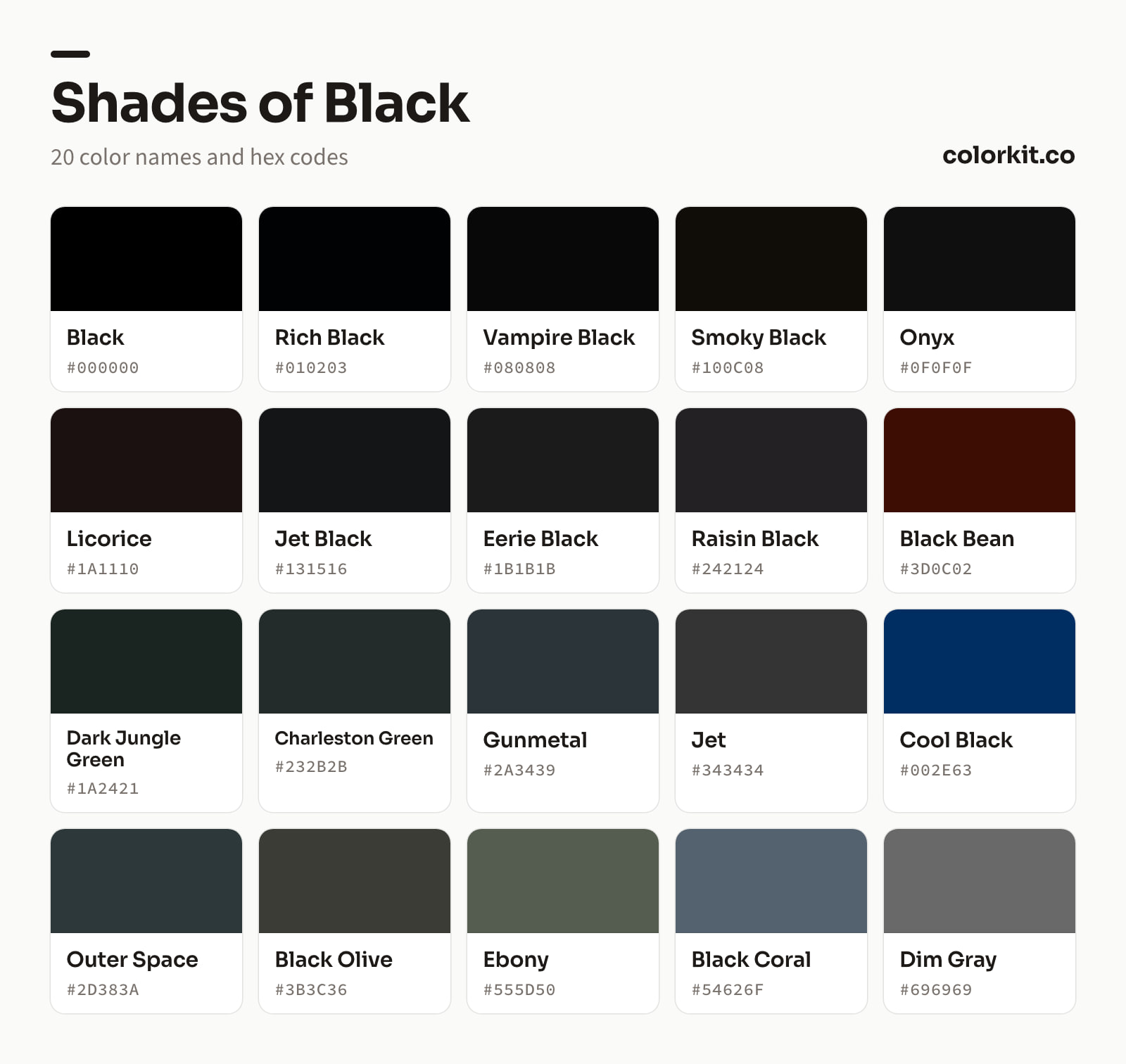
Black runs from true Black (#000000) and the near-identical Rich Black (#010203) through warm Licorice (#1a1110) and cool Gunmetal (#2a3439) up to the soft Dim Gray (#696969). This guide lists 20 named shades of black with their hex codes, sorted from darkest to lightest. Click any swatch to copy the code, or open it for the RGB, CMYK, and HSL values plus the palette generator. To mix black in paint, see what colors make black, or turn any hex into a full tint and shade scale with the color shades generator.
20 shades of black with their names and hex codes, darkest to lightest
Black is the darkest color on the spectrum, represented by the hex code #000000. Unlike other colors, black is defined by the complete absence of light, making it a true constant in any design system. In digital work, it serves as a foundational color for text, contrast, and dramatic visual impact. Its timeless versatility has made it a staple in everything from minimalist layouts to bold, high-contrast compositions. Whether used as a background or accent, Black brings depth, clarity, and a sense of sophistication to any palette.
Rich Black is a near-black shade with the faintest hint of blue, giving it a subtle depth that pure black sometimes lacks. With its hex value of #010203, the red, green, and blue channels are stacked just barely above zero, creating a color that reads as black to the eye but carries a whisper of coolness on close inspection. Designers often reach for blacks like this when they want depth without the harshness of a true #000000, making it a great choice for backgrounds, typography, and moody, atmospheric designs.
Vampire Black is an exceptionally dark shade of black, sitting just a few values above pure black on the hex scale. With its near-total absence of light, this color carries a moody, mysterious quality that suits dramatic designs and striking contrast work. Designers often reach for Vampire Black when pure black feels too harsh, as its subtle depth can soften shadows and backgrounds while still delivering maximum darkness. It pairs well with rich jewel tones, deep reds, and metallic accents, making it a strong choice for gothic aesthetics, elegant typography, and atmospheric digital art.
Smoky Black is a deep, muted black with a subtle warmth that sets it apart from pure black. With its hex code #100c08, this shade carries faint undertones of brown, giving it a soft, charred quality reminiscent of smoke rising from a dying fire. It works beautifully as an alternative to stark black in design projects, offering depth without harshness. Smoky Black pairs well with warm earth tones, creams, and muted golds, making it a versatile choice for backgrounds, typography, and atmospheric compositions.
Onyx is a deep, near-black shade with the hex code #0f0f0f. Sitting just shy of pure black, it carries a subtle softness that pure black can lack, making it a popular choice for backgrounds, typography, and UI design where harsh contrast needs to be tempered. Its quiet richness works beautifully in monochrome palettes and pairs effortlessly with brighter accent colors, allowing them to stand out without overwhelming the eye.
Licorice is a deep, near-black shade with just a hint of warmth, thanks to its subtle red undertones. Its hex code, #1a1110, places it slightly off pure black, giving it a softer, richer quality that can add depth without feeling harsh. This makes Licorice a versatile choice for backgrounds, text, and accents where a true black might feel too stark. Designers often reach for colors like Licorice when they want contrast with a touch of character, as its gentle warmth pairs beautifully with creams, browns, and muted earth tones.
Jet Black is an exceptionally dark shade that sits just shy of true black, with a subtle cool undertone thanks to its slightly higher blue and green values. The hex code #131516 offers a touch more depth and dimension than pure black, making it a versatile choice for backgrounds, typography, and moody design palettes. Designers often reach for Jet Black when they want the drama of black with a hint of softness that keeps compositions from feeling too stark.
Eerie Black is a near-black shade that sits just shy of pure black on the color spectrum. With its hex code #1b1b1b, it carries a subtle depth that pure black lacks, making it a popular choice for backgrounds, text, and UI elements where a softer, less harsh dark tone is preferred. Designers often reach for Eerie Black when they want the drama of black with a touch more dimension, and it pairs beautifully with bold accent colors or light neutrals alike.
Black Bean is a deep, dark shade of brown with a subtle reddish undertone. Sitting just off pure black, it offers a warmth that true black can lack, making it a great choice for designs that need darkness without feeling stark or cold. It works beautifully as a background color, in typography, or as part of earthy, natural palettes. Pair it with warm creams, muted oranges, or rich golds to bring out its cozy, grounded character.
Raisin Black is a deep, near-black shade with a subtle hint of warm undertones that keep it from feeling completely stark. With its hex value of #242124, this color sits just a touch off pure black, giving it a soft richness reminiscent of dried fruit skin. Designers often reach for Raisin Black when they want the depth of black with a bit more warmth and character, making it a versatile choice for backgrounds, typography, and elegant branding palettes.
Dark Jungle Green is a deep, muted shade that sits quietly between black and green. With its near-black base touched by subtle earthy undertones, it brings a grounded, natural feel to any palette. This color works beautifully as a rich alternative to pure black, offering just enough warmth and depth to keep designs feeling organic rather than stark. Dark Jungle Green pairs well with creams, muted golds, and forest-inspired hues, making it a versatile choice for backgrounds, typography, and moody, nature-themed compositions.
Charleston Green is a deep, near-black shade with a subtle hint of blue-green undertones. Sitting just off true black on the color spectrum, it offers a slightly softer and warmer alternative that can bring depth and dimension to designs. This versatile color works beautifully in interior palettes, typography, and UI design where pure black feels too stark. Pair it with crisp whites for classic contrast, or layer it with muted earth tones for a rich, sophisticated look.
Cool Black is a deep, dark shade of blue-black that sits at the intersection of midnight and navy. With its rich blue undertones, this color offers more depth than a pure black while still reading as a dark, sophisticated neutral. Designers often reach for Cool Black when they want the drama of black with a hint of personality, making it a popular choice for luxury branding, evening wear palettes, and moody backgrounds. Pairs beautifully with metallics, crisp whites, and icy blues for an elegant, polished look.
Gunmetal is a deep, muted blue-gray that carries a subtle coolness without being cold. With its balanced mix of dark tones and hints of blue, this shade sits comfortably between charcoal and slate, making it a versatile choice for designers seeking something darker than a typical gray but softer than pure black. Gunmetal works well for backgrounds, typography, and UI elements where contrast is needed without harshness. It pairs beautifully with warm metallics like copper and brass, as well as lighter neutrals, giving designs a grounded, refined feel.
Jet is a deep, dark gray that sits just shy of true black. With its hex code #343434, it carries a subtle softness that pure black can lack, making it a popular choice for backgrounds, typography, and UI elements where a gentler contrast is preferred. The name evokes the polished, glossy look of jet gemstone, giving the shade a sense of quiet sophistication. Designers often reach for Jet when they want depth and richness without the harshness of #000000.
Outer Space is a deep, muted shade of black with a subtle blue-gray undertone. Its hex code, #2d383a, gives it just enough color to feel softer than a true black, making it a versatile choice for backgrounds, typography, and interface design. This quiet, atmospheric tone evokes the vast darkness of the night sky, adding depth without overwhelming a composition. Outer Space pairs well with brighter accent colors and works beautifully in palettes that call for a dark neutral with a hint of coolness.
Black Olive is a deep, muted shade that sits just off pure black, carrying a subtle hint of green in its undertones. This quiet complexity makes it a versatile alternative to standard black, offering a softer, more organic feel in palettes and designs. It works beautifully as a background color or for text where a gentler contrast is desired, pairing well with earthy tones, warm neutrals, and rich greens. Designers often reach for shades like Black Olive when they want depth without the harshness of true black.
Ebony is a deep, muted shade that sits between gray and green on the color spectrum. With its hex code #555d50, this color carries a subtle earthy quality that keeps it from feeling as harsh as pure black. The faint green undertones give it an organic, grounded character, making it a popular choice for designs that call for sophistication with a touch of natural warmth. Ebony works beautifully as a background color, in typography, or as part of a muted, nature-inspired palette.
Black Coral is a muted, smoky blue-gray that sits comfortably between slate and charcoal. With its subdued coolness and gentle depth, it works well as a grounding neutral in palettes that need a touch of atmosphere without the harshness of true black. Designers often reach for shades like this one in UI backgrounds, typography, and branding where a softer, more sophisticated dark tone is preferred. Its quiet versatility makes it easy to pair with warmer accents, crisp whites, or earthy hues, giving designs a calm, understated feel.
Dim Gray is a balanced mid-tone gray with the hex code #696969. Sitting comfortably between black and white, it offers a soft, understated neutral that works well in nearly any design context. Unlike pure black, Dim Gray feels gentler and less harsh, making it a popular choice for body text, backgrounds, and interface elements where contrast needs to be present but not overwhelming. Its equal blend of red, green, and blue gives it a perfectly neutral character with no color cast, which makes it easy to pair with virtually any palette. Designers often reach for Dim Gray when they want the weight of a dark shade without the starkness of true black.
Dim Gray
Near, warm, cool, and charcoal blacks
Most named blacks differ by a small lift in brightness or a faint color cast. Picking the right cast keeps black from looking flat next to the rest of a palette.
True and near blacks
Black (#000000), Rich Black (#010203), Vampire Black (#080808), Onyx (#0f0f0f), Jet Black (#131516), and Eerie Black (#1b1b1b) all read as black on most screens. Use them for text, logos, and backgrounds where you want the strongest contrast.
Warm blacks
Smoky Black (#100c08), Licorice (#1a1110), Black Bean (#3d0c02), and Black Olive (#3b3c36) carry a brown, red, or olive cast. They sit more comfortably next to warm colors, wood tones, and photography than a pure black does.
Cool blacks
Dark Jungle Green (#1a2421), Charleston Green (#232b2b), Gunmetal (#2a3439), Outer Space (#2d383a), Cool Black (#002e63), and Black Coral (#54626f) lean blue or green. They suit cool palettes and dark mode interfaces, where pure black can feel harsh.
Charcoal and gray blacks
Raisin Black (#242124), Jet (#343434), Ebony (#555d50), and Dim Gray (#696969) are the lightest blacks here. They work for secondary text, borders, and shadows that should stay dark without competing with true black.
How many shades of black are there?
Strictly, there is one true black: #000000, which on a screen means no light at all. Every other shade is a very dark color with a slight lift or cast. This guide collects 20 named shades of black with set hex codes, from Black (#000000) to Dim Gray (#696969). Most of the names and values follow Wikipedia’s list of shades of black.
What is the darkest shade of black?
Black (#000000) is the darkest, with red, green, and blue all at zero. Close behind it are Rich Black (#010203) and Vampire Black (#080808), which are so dark that most people can’t tell them apart from true black on screen.
What is the lightest shade of black?
Dim Gray (#696969) is the lightest shade on this page, a soft dark gray that is also the CSS named color dimgray. The next-lightest are Black Coral (#54626f) and Ebony (#555d50).
What is rich black?
In printing, rich black is an ink mix that combines black ink with one or more of the cyan, magenta, and yellow inks. The extra ink makes large black areas look deeper than black ink alone. On screen, this guide lists it as #010203, the value Wikipedia’s list of colors gives for rich black in the FOGRA39 print standard.
What is the hex code for black?
The hex code for black is #000000, which you can shorten to #000. It is also the CSS named color black, and its RGB value is rgb(0, 0, 0).
What colors make black?
On a screen, black is simply the absence of light. In paint, the classic near-black is ultramarine blue mixed 1:1 with burnt umber, which gives a deeper, more interesting black than most tube blacks. The guide to what colors make black covers warm and cool mixes in detail.
Found a black you like? Click it to open the full color page, then send it to the palette generator to build a scheme around it, or drop it into the color picker to fine-tune the exact tone. If you’d rather start from a finished scheme, browse our black color palettes.