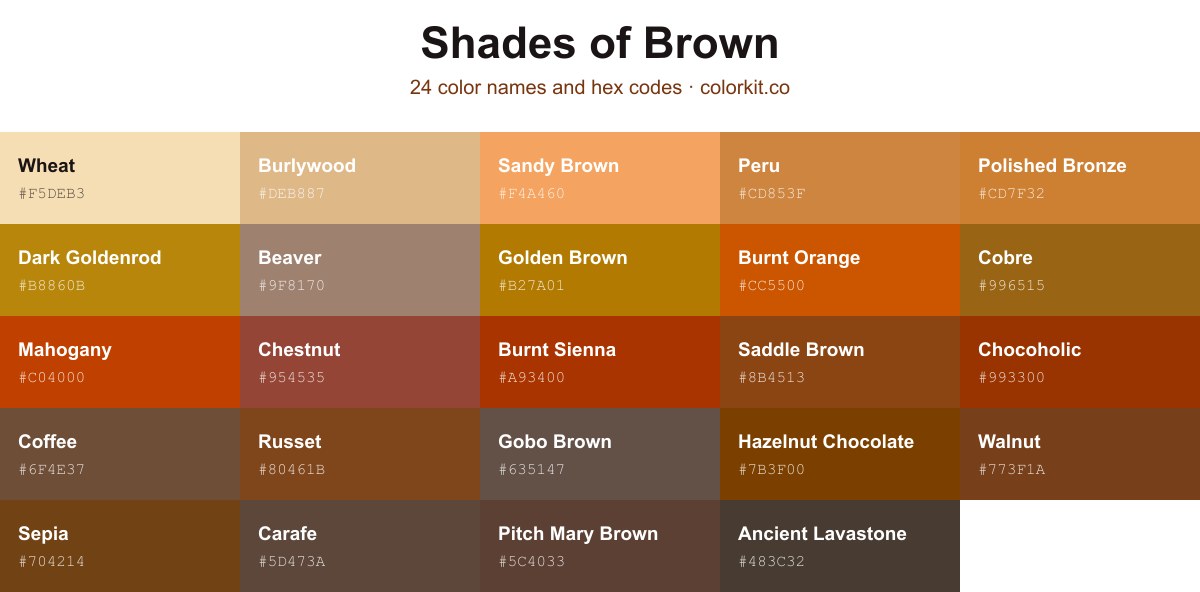
Brown runs from pale, sandy tones like Wheat (#f5deb3) and Sandy Brown (#f4a460) down to deep, near-black tones like Carafe (#5d473a) and Ancient Lavastone (#483c32), with mid-range tones such as Walnut (#773f1a) and Chestnut (#954535) in between. Every shade below lists its hex code. Click any swatch to copy the code or open its RGB, CMYK, and HSL values and the palette generator.
Chestnut is a deep, warm reddish brown with rich earthy undertones. The hex color #742802 brings a grounded, autumnal feel to palettes and works well for adding warmth, depth, and natural character to designs.
Walnut is a rich, earthy brown that anchors a palette with natural warmth and reliable stability. This shade captures the deep, toasted tones of dark hardwoods, evoking a sense of organic sophistication and timeless comfort. Because of its medium-dark saturation, it serves as an excellent foundational hue, providing enough contrast to highlight lighter accents while maintaining a grounded, professional presence in both digital and print design.
Cobre is a warm, metallic-inspired shade of brown that captures the essence of polished copper ore. This rich, earthy hue carries a subtle golden undertone, making it an excellent choice for designs that require a touch of natural warmth or organic sophistication. Its mid-tone depth provides a versatile alternative to standard neutrals, pairing beautifully with deep creams, forest greens, and muted terracotta. Whether used as a primary accent or a textured background element, Cobre adds a grounded, inviting quality to artistic projects.
Sepia is a rich, warm brown that evokes the nostalgic aesthetic of vintage photography and classic ink drawings. With its deep, earthy undertones, this shade offers a sense of history and organic grounding, making it a versatile choice for designs that require a touch of traditional warmth or a textured, natural feel. It serves as an excellent neutral, providing depth to palettes without the starkness of black or the coolness of gray.
Gobo Brown is a deep, earthy brown that feels both grounded and sophisticated. This shade captures the essence of raw materials, bringing to mind the rich textures of tree bark, aged leather, or dark, fertile soil. Because of its muted, neutral undertones, it works exceptionally well as a grounding element in design projects where a balance of warmth and stability is needed. It sits comfortably alongside other natural tones, making it an ideal choice for backgrounds, typography, or accent elements that require a subtle, organic touch.
Chocoholic is a deep, rich brown that evokes the indulgence of high-quality dark chocolate. With its warm, earthy undertones and saturated appearance, this shade brings a sense of stability and comfort to any design palette. It functions beautifully as a grounding element in sophisticated layouts, offering a luxurious, organic alternative to standard black or charcoal. Whether used as a primary background color or an elegant accent, Chocoholic adds a smooth, decadent texture to branding and creative projects.
Ancient Lavastone is a deep, muted brown that evokes the rugged texture and timeless permanence of cooled volcanic rock. Its dark, earthy undertones offer a sense of grounded stability, making it a sophisticated choice for designs requiring a strong, neutral anchor. Because of its desaturated quality, this shade pairs seamlessly with warmer accents or crisp whites, providing a solid foundation for palettes that prioritize understated elegance and natural inspiration.
Pitch Mary Brown is a deep, grounded shade of brown that exudes a sense of reliability and earthy sophistication. With its rich, dark undertones, this color captures the essence of raw umber and polished mahogany, making it an excellent choice for adding depth and weight to a design palette. Because of its dark, neutral nature, Pitch Mary Brown works exceptionally well as an anchoring element in both web layouts and artistic compositions, providing a subtle warmth that contrasts beautifully with lighter creams, soft terracottas, or even vibrant teals.
Hazelnut Chocolate is a deep, rich brown that evokes the warmth of roasted nuts and smooth, velvety cocoa. As a dark, earthy tone with subtle reddish undertones, it feels grounded and indulgent, making it an excellent choice for designs that require a sense of sophistication and comfort. This shade pairs beautifully with cream or beige for a classic look, or it can provide a striking, natural contrast when placed alongside soft greens or muted blues in a color palette. Its versatility makes it a reliable staple for branding, interior accents, or any project aiming for an organic, timeless aesthetic.
Sienna is a warm, earthy reddish-brown that draws its inspiration from the natural pigment found in raw earth. This rich, medium-dark tone evokes the feeling of autumnal landscapes, terracotta pottery, and weathered stone. Its grounded quality makes it an excellent choice for designers looking to add a sense of stability, comfort, and rustic elegance to their palettes. Because of its subtle orange undertones, Sienna pairs beautifully with cool blues or soft creams, offering a versatile anchor for both traditional and contemporary design projects.
Saddle Brown is a deep, rich, and earthy tone that captures the essence of well-worn leather and natural timber. This robust color carries a strong reddish-brown undertone, offering a warm and grounding presence in any design palette. Because of its organic feel, it serves as an excellent anchor color, providing a reliable and sophisticated structure when paired with lighter neutrals or vibrant accent shades.
Russet is a warm, earthy shade of brown with distinct reddish undertones that evoke the feeling of autumn leaves, rich soil, and textured leather. This robust color carries a sense of reliability and groundedness, making it an excellent choice for designs that require a touch of natural, rustic character. Because of its deep saturation, Russet works beautifully as a grounding accent or a primary hue in palettes that aim to feel organic, welcoming, and timeless.
Mahogany is a rich, reddish-brown hue that captures the warmth and depth of fine-grained hardwood. This sophisticated shade bridges the gap between deep earth tones and vibrant fire-inspired pigments, making it an excellent choice for adding weight and elegance to a design palette. Because of its strong saturation and bold character, Mahogany works effectively as an accent color to ground lighter elements or as a primary shade to evoke a sense of tradition, luxury, and organic comfort.
Coffee is a rich, warm brown that captures the deep, toasted tones of freshly roasted beans. This hue sits firmly in the medium-dark range of the brown spectrum, offering a grounded and organic feel that works exceptionally well as a neutral anchor in design palettes. Its balanced saturation makes it a versatile choice for creating a cozy, sophisticated aesthetic, whether you are using it for elegant typography, subtle background textures, or natural-looking illustrative elements.
Carafe is a deep, warm brown that evokes the comfort of a freshly brewed cup of dark roast coffee or the rich, textured tones of aged leather. As a sophisticated neutral, it grounds a color palette with its stable, earthy presence and subtle red undertones. Designers often turn to Carafe when they need to add weight or warmth to a composition without the starkness of black. It pairs seamlessly with creamy whites, soft terracotta, or muted teals, making it a versatile choice for both modern branding and traditional interior design schemes.
Carafe
How many shades of brown are there?
A screen can display millions of distinct brown values, since brown covers a wide span of hue, saturation, and lightness. This guide collects 24 named shades of brown to keep them practical to choose from. They range from light tones like Wheat (#f5deb3) to deep tones like Ancient Lavastone (#483c32).
What are the most popular shades of brown?
Common named browns include Walnut (#773f1a), Chestnut (#954535), Russet (#80461b), Golden Brown (#b27a01), Sandy Brown (#f4a460), and Polished Bronze (#cd7f32). They span warm reddish browns to lighter golden and sandy tones. Click any swatch on this page to copy its hex code.
What is the darkest shade of brown?
The darkest shade of brown on this page is Ancient Lavastone (#483c32), a deep brown that reads close to black. Carafe (#5d473a) is the next darkest, followed by Hazelnut Chocolate (#7b3f00). All three work well as text, shadow, or grounding tones.
What is the lightest shade of brown?
The lightest shade of brown here is Wheat (#f5deb3), a pale tan with a soft yellow cast. Sandy Brown (#f4a460) is the next lightest, a warmer light brown. Both suit backgrounds, neutrals, and light UI surfaces.
What colors make brown?
Brown is essentially a dark, muted orange. Mix red and yellow to make orange, then dull and darken it with a little blue or black. Mixing any two complementary colors, such as orange and blue, also produces brown.
Found a brown you like? Click it to open the full color page, then send it to the palette generator to build a scheme around it, or drop it into the color picker to fine-tune the exact tone. If you’d rather start from a finished scheme, browse our brown color palettes.